Free delivery on orders of $70 or more (Quebec/Ontario), $100 (rest of Canada) before taxes and after discounts.


Magnesium and Migraines: A Natural Ally for Relief
According to the American Migraine Foundation, about 36 million Americans (nearly 12% of the population), 370,000 Canadians, and 2.2% of the global population suffer from migraines. Given how many people are affected worldwide by this debilitating condition, more research is needed to improve prevention and treatment options.
The Role of Magnesium in Migraines
Recent studies suggest that magnesium plays a key role in the pathogenesis and treatment of migraines. A magnesium deficiency (hypomagnesemia) can:
-
trigger cerebral arterial vasoconstriction,
-
increase platelet aggregation,
-
stimulate serotonin release,
-
impair NMDA glutamate receptor control,
-
trigger cortical spreading depression (CSD), responsible for the aura that precedes many migraines,
-
increase the release of substance P, a molecule involved in pain signaling.
👉 These mechanisms explain why low magnesium levels may worsen the frequency and severity of migraines.
Why Magnesium Deficiency Is Often Overlooked
Although magnesium is an essential mineral for many physiological processes, routine blood tests do not accurately reflect real magnesium stores. Only about 2% of the body’s magnesium is found in measurable blood plasma, while 67% is stored in bones and 31% in cells.
This means magnesium deficiency is frequently underdiagnosed, even though it is a cofactor in over 300 biochemical reactions (including glucose metabolism, ATP production, DNA synthesis, muscle contraction, cardiac function, and neurotransmitter regulation).
Magnesium for Migraine Prevention
Because of its mechanisms of action, magnesium is increasingly studied as a natural prophylactic option for migraine prevention. Research shows that a daily dose of 600 mg of magnesium over twelve weeks can significantly reduce migraine frequency.
⚠️ Always consult a healthcare professional before beginning any supplementation.
Magnesium-Rich Foods
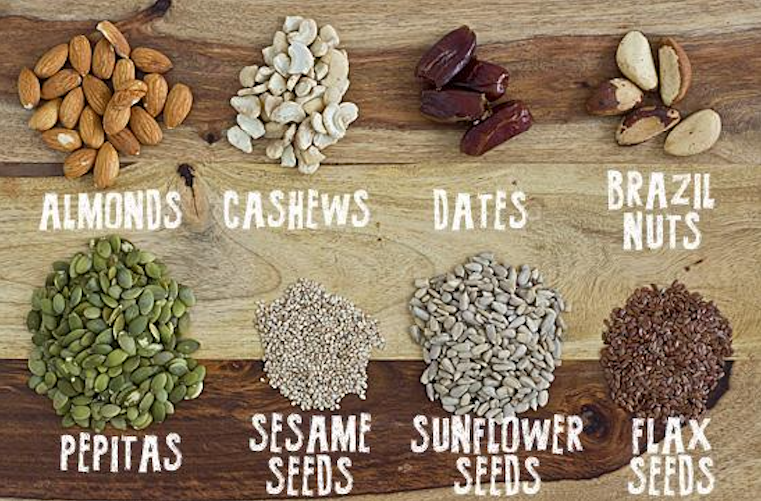
Diet is the foundation of good magnesium levels. Foods particularly rich in this mineral include:
-
almonds, cashews, Brazil nuts,
-
dates,
-
pumpkin seeds, sesame seeds, sunflower seeds, and flaxseeds.
These foods not only provide magnesium but also a wide range of other nutrients that support overall health.
Choosing the Right Magnesium Supplement
Supplementation is often necessary because modern diets and agricultural practices leave many foods depleted of nutrients. Other factors—such as long-term medication use, frequent alcohol consumption, and oral contraceptives—can further deplete magnesium stores.
👉 For optimal absorption, choose a highly bioavailable form.
Land Art’s liquid ionic magnesium is an excellent option because:
-
it is ionized liquid magnesium chloride,
-
quickly absorbed by the body,
-
and easy to integrate into daily routines (add to juice or a smoothie at breakfast).
In Summary
Magnesium plays a crucial role in preventing and reducing migraines. Although often overlooked, magnesium deficiency is common and can worsen this condition. A diet rich in magnesium and, if needed, high-quality supplementation offers a safe, natural, and effective way to support your nervous system and reduce migraine frequency.
References
Esfanjani, Ali Tarighat, Reza Mahdavi, Mehrangiz Ebrahimi Mameghani, Mahnaz Talebi, Zeinab Nikniaz, and Abdolrasool Safaiyan. “The Effects of Magnesium, L-Carnitine, and Concurrent Magnesium–l-Carnitine Supplementation in Migraine Prophylaxis.” Biological Trace Element Research 150.1-3 (2012) : 42-48. Web.
Facchinetti, Fabio, Grazia Sances, Paola Borella, Andrea R. Genazzani, and Giuseppe Nappi. “Magnesium Prophylaxis of Menstrual Migraine: Effects on Intracellular Magnesium.” Headache: The Journal of Head and Face Pain 31.5 (1991) : 298-301. Web.
Mauskop, A., Altura, BM. Role of magnesium in the pathogenesis and treatment of migraines. Clin Neurosci. (1998);5(1):24-7. Web.
Mauskop, Alexander, and Jasmine Varughese. “Why All Migraine Patients Should Be Treated with Magnesium.” Journal of Neural Transmission 119.5 (2012) : 575-79. Web.
Peikert, A., C. Wilimzig, and R. Kohne-Volland. “Prophylaxis of Migraine with Oral Magnesium: Results from a Prospective, Multi-Center, Placebo-Controlled and Double-Blind Randomized Study.” Cephalalgia 16.4 (1996) : 257-63. Web.
Sun-Edelstein, Christina, and Alexander Mauskop. “Role of Magnesium in the Pathogenesis and Treatment of Migraine.” Expert Review of Neurotherapeutics 9.3 (2009) : 369-79. Web.
Thomas, J. Tomb, E., “Migraine treatment by oral magnesium intake and correction of the irritation of buccofacial and cervical muscles as a side effect of mandibular imbalance.” Magnes Res. 1994 Jun;7(2):123-7.
Trauninger, Anita, Zoltan Pfund, Tamas Koszegi, and Jozsef Czopf. “Oral Magnesium Load Test in Patients With Migraine.” Headache: The Journal of Head and Face Pain 42.2 (2002) : 114-19. Web.