Free delivery on orders of $70 or more (Quebec/Ontario), $100 (rest of Canada) before taxes and after discounts.

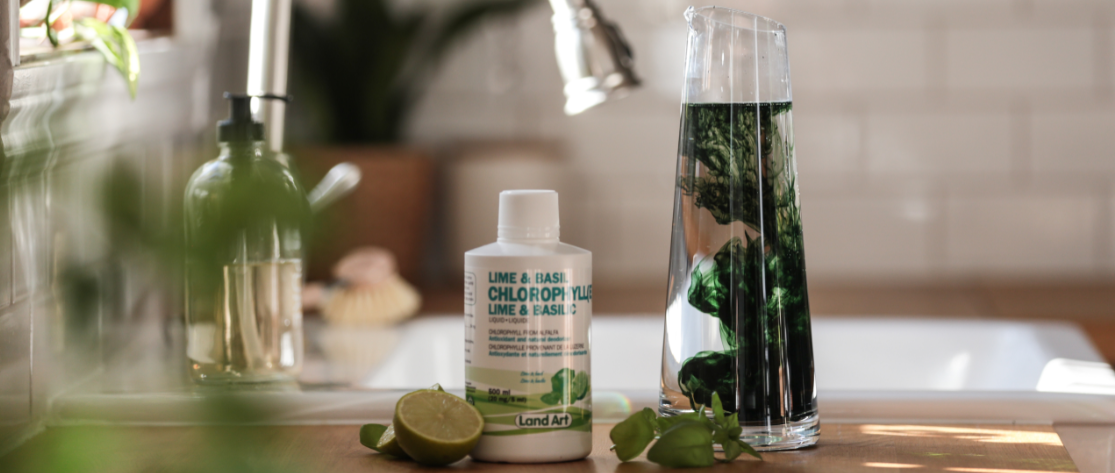
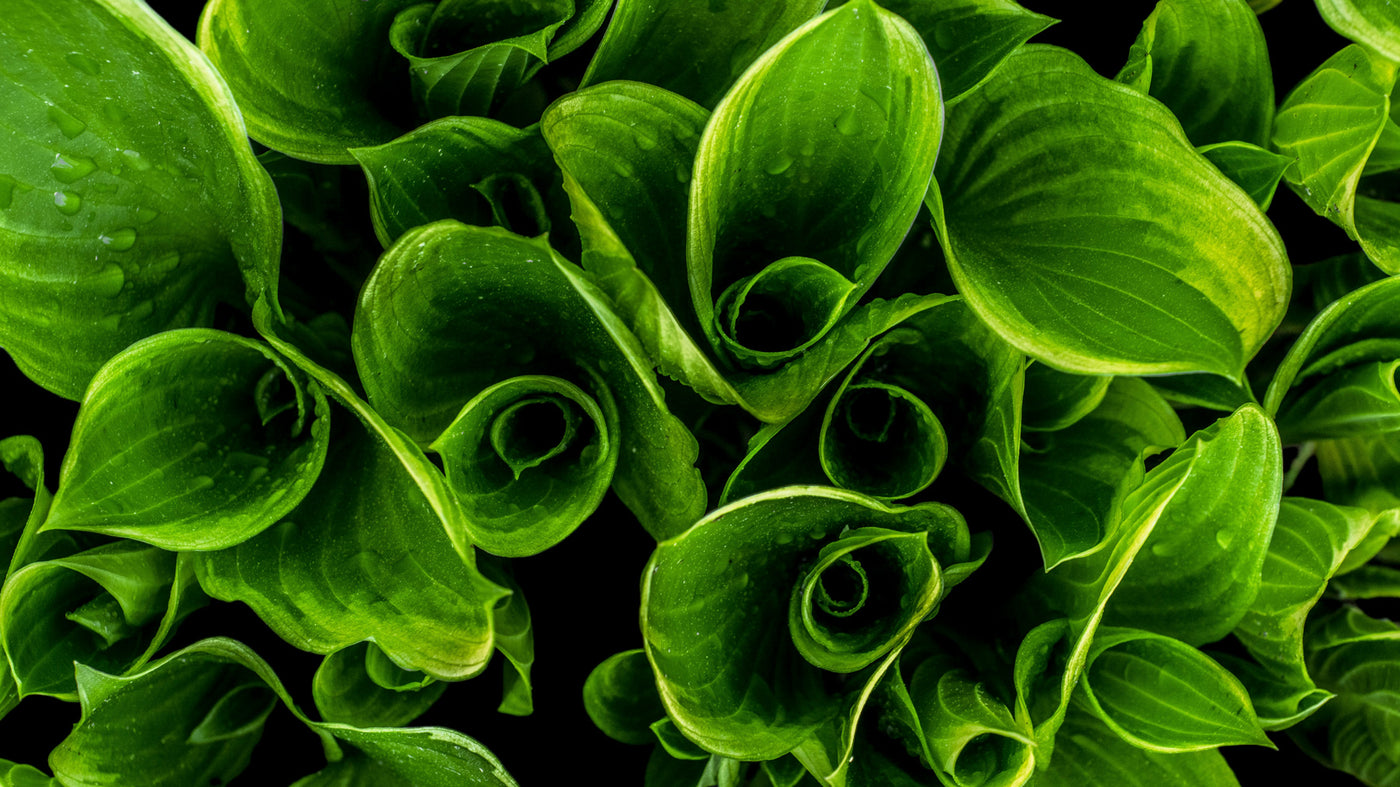
Chlorophyll is found in plants, algae, and cyanobacteria. It is the pigment that gives color to the leaves of trees and plants.
Chlorophyll is responsible for photosynthesis. It is the process that, from light, carbon dioxide, and water, produces sugars called carbohydrates (energy) (27, 28). Chlorophyll is essential to life. It allows the entire food chain to feed on the energy it produces.
It is photosynthesis and chlorophyll that are at the origin of all the oxygen we breathe on Earth (38).
Chlorophyll is therefore essential to life and to our survival. Even if it seems so small to our eyes, chlorophyll is omnipresent and plays a major role on Earth.
Types of chlorophyll
In its natural state, there are five types of chlorophyll. Among them, four come from the plant kingdom, while the last is exclusive to the world of microorganisms (prokaryotes).
-
Chlorophyll A: Found in plants, algae, and cyanobacteria.
-
Chlorophyll B: Found in plants and green algae.
-
Chlorophyll C: Found in diatoms, brown algae, and dinophytes.
-
Chlorophyll D: Found only in red algae.
-
Chlorophyll E: Found in certain prokaryotes.
Several types of chlorophyll coexist, but the two main types are chlorophyll A and chlorophyll B. In general, we find three times more chlorophyll A than chlorophyll B (30).
Molecule
Have you ever heard that chlorophyll is the green blood (blood of plants)? Some even say that the chlorophyll molecule resembles our red blood cells. In reality, they have several similarities, but chlorophyll is very different from our red blood cells.
Indeed, even though both molecules have a similar ring, we can see that hemoglobin has an iron atom in its center while chlorophyll has a magnesium atom. Also, the chain of the chlorophyll molecule is longer, which also makes it insoluble in water (31). In its natural state, chlorophyll is therefore soluble in lipids (oils). It cannot be diluted in water.
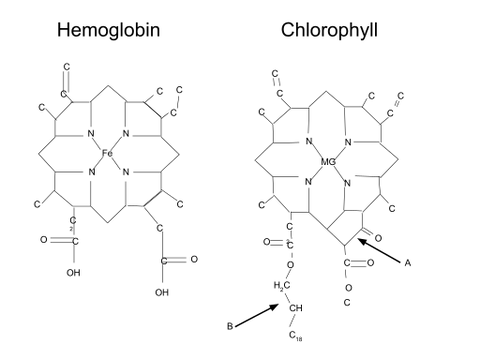
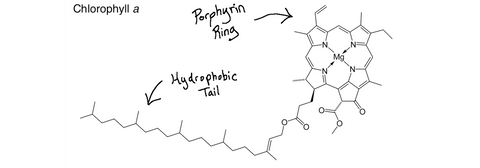
Image modified from “Chlorophyll-a-2D-skeletal,” by Ben Mills (public domain)
Why consume chlorophyll?
There are many advantages to consuming chlorophyll, and scientific evidence is growing. Here are the main health benefits recognized by Health Canada, as well as other positive effects still under serious study.
Health benefits of chlorophyll recognized by Health Canada
Health Canada recognizes and authorizes two levels of health claims.
Its antioxidant power
The antioxidant capacity of chlorophyllin is about 2,000 times greater than that of blueberry juice and 20 times greater than that of resveratrol, an organic molecule considered one of the best tools to fight oxidative damage caused by chemical carcinogens and radiation. It is therefore an excellent way to fight free radicals on a daily basis (5,10)!
Its internal deodorizing power
Chlorophyll has the ability to reduce bad breath, food odors, body odors, and intestinal odors.
This is thanks in part to its ability to bind to certain organic molecules responsible for unpleasant odors, such as putrescine and cadaverine. Chlorophyll neutralizes these odors effectively. Other studies have also shown very beneficial effects in patients who underwent a colostomy (11,12).
Other health benefits according to research
Even though Health Canada already allows two official health claims, several other benefits are still under study. Results so far are promising.
Here are some of them:
Detoxifying effect
Chlorophyll binds to aflatoxins and promotes their elimination (detoxification) (8). Aflatoxins are toxins produced by microscopic molds, such as those that can develop on peanuts. They are very dangerous for the liver and, because they bind to DNA, may cause cancer.
Chlorophyll may also deactivate intermediate aflatoxin-DNA compounds that trigger cancer development (2,9,10).
Another study shows that taking chlorophyll could help the body eliminate other dangerous toxins, such as triethylamines (7).
Cancer prevention and colon cancer treatment
Studies show that chlorophyllin has promising effects in cancer prevention. It appears capable of preventing cell mutations and fighting free radicals that damage cells and cause cancers over the long term (2,3,17). Chlorophyllin may also have a therapeutic role in treating colon cancer by acting on ribonucleotide reductase (14).
Anti-inflammatory
Studies show that type A chlorophyll has remarkable anti-inflammatory effects. It works in part by inhibiting cytokines responsible for inflammatory reactions (25). Chlorophyll may therefore be a powerful ingredient in the development of new skin medications.
Supports wound healing
Several studies (22,23,24) demonstrate encouraging effects on skin healing. Topical application of chlorophyll gel accelerates skin repair and helps prevent infections. It is also believed that chlorophyll’s anti-inflammatory properties support wound healing.
Anti-aging effect for the skin
Applied topically as a gel, chlorophyll shows very promising effects. It helps reduce signs of skin aging caused by prolonged sun exposure.
Its anti-aging and anti-wrinkle effects may even be comparable to some prescription creams (such as those containing retinoic acid/tretinoin).
That’s not all! One study also showed that chlorophyll may protect the body from ionizing radiation, such as gamma rays (15), especially for the skin.
Acne treatment
Topical chlorophyll also shows interesting effects in acne treatment. Studies show that its antioxidant, anti-inflammatory, and healing properties reduce the number of lesions, acne severity, and sebum levels after three weeks of treatment (19,20).
Stimulates white blood cell production (immune system)
Indeed, a Chinese study showed that taking 120 mg of chlorophyll increased white blood cell production in leukopenic patients (those with low white blood cell counts) (6).
How to consume more chlorophyll?
Chlorophyll in our diet
The first step is to add more chlorophyll-rich foods to your diet. Eating more green vegetables is the simplest way. They are not only rich in chlorophyll but also packed with vitamins and minerals beneficial to health. The key is to eat them regularly, every day.
It is not necessary to eat only salad:
-
Vary your green vegetables
-
Add salad as a side dish
-
Steam broccoli
-
Add spinach to stir-fries
-
Cook green beans
-
Eat green peas from time to time
If you already make smoothies in the morning, add some green vegetables.
The key is to integrate them into your eating habits. But be careful! Chlorophyll is sensitive to heat, so avoid overcooking green vegetables.
On the other hand, dietary chlorophyll is difficult to absorb for two main reasons:
-
Chlorophyll is contained within protective cells (chloroplasts) that are not all broken down during digestion.
-
Chlorophyll is fat-soluble, not water-soluble.
As a result, research shows that only about 4% of dietary chlorophyll is absorbed (26).
To benefit fully, you would need to consume about 100 mg per day. That would mean eating the equivalent of 50 cups of parsley or 100 cups of spinach daily — clearly impossible!
Dietary sources of chlorophyll and absorption
| Food (1 cup) | Chlorophyll (mg) | Absorbed (mg) |
|---|---|---|
| Parsley | 48.0 | 1.9 |
| Spinach | 23.7 | 0.95 |
| Watercress | 15.6 | 0.6 |
| Green beans | 8.3 | 0.33 |
| Arugula | 8.2 | 0.33 |
| Endive | 5.2 | 0.2 |
| Green peas | 4.8 | 0.19 |
Chlorophyll supplements
Since food alone is not enough, taking a chlorophyll supplement offers great advantages.
-
It guarantees a consistent daily dose.
-
It is more bioavailable because it is water-soluble.
-
Studies show that only 4% of food chlorophyll is absorbed, compared to much higher absorption with supplements.
How to choose the right chlorophyll supplement?
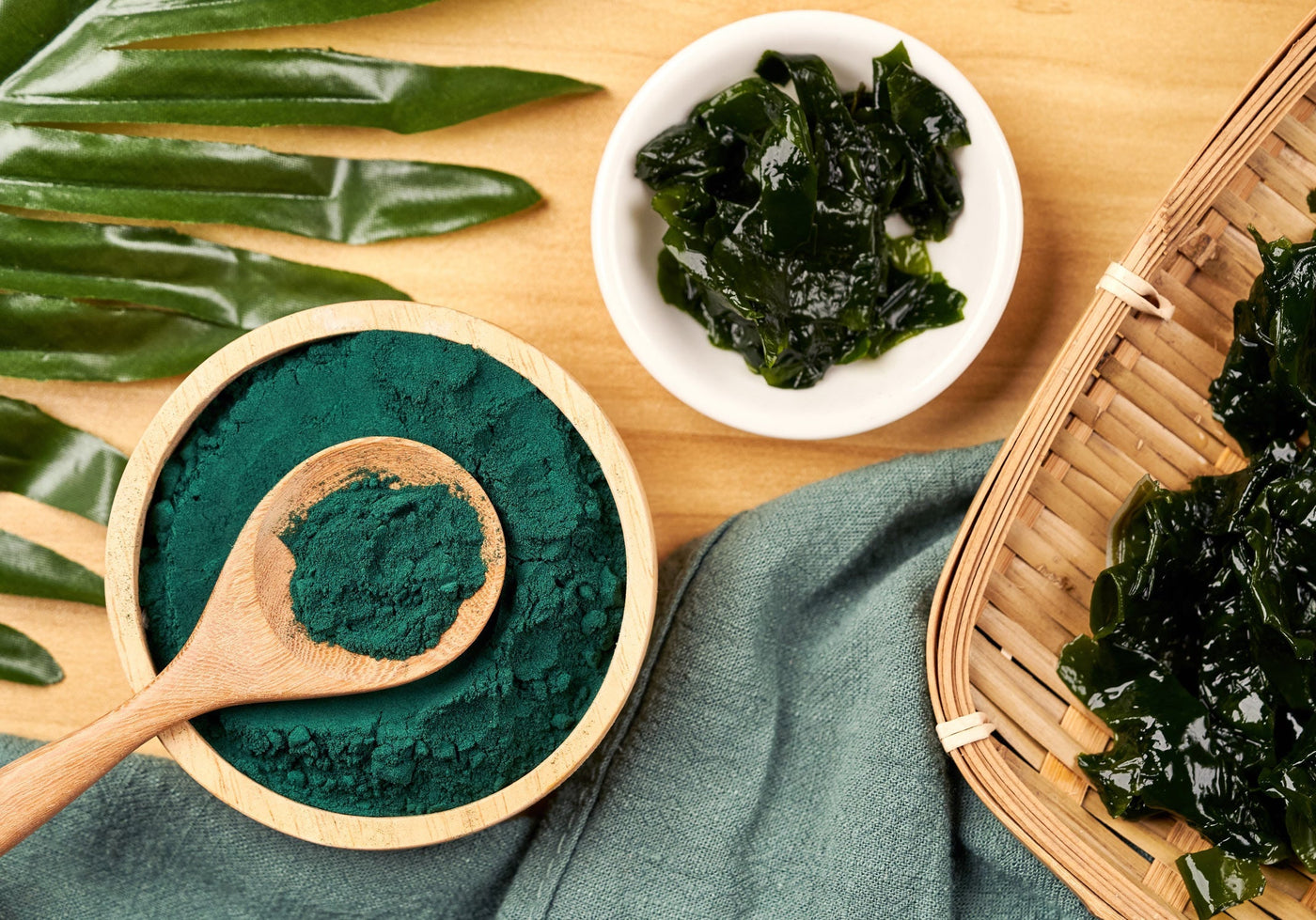
1. Do not confuse chlorophyll with chlorella, spirulina, or greens
Not all green supplements are equal! The chlorophyll they contain is not bioavailable. A true chlorophyll supplement contains only chlorophyllin, not vitamins, minerals, or proteins.
2. Know the source of your chlorophyll
Chlorophyll is usually extracted from mulberry leaves (Morus alba) or alfalfa (Medicago sativa). Mulberry-based chlorophyll is obtained indirectly from silkworm droppings and involves chemical solvents, leaving residues.
Alfalfa-based chlorophyll is extracted directly from the plant shoots. It grows quickly and does not deplete soil. This is why Land Art chlorophyll comes from non-GMO alfalfa, cold-extracted without chemical solvents.
3. Prefer liquid form
Liquid chlorophyll is easier to absorb than capsules or tablets. Choose liquid supplements for maximum bioavailability.
4. Select the right concentration
Chlorophyll liquids vary in concentration. Higher concentrations taste stronger but are more economical. Beginners should start with a lower concentration.
5. Understand the extraction method
Chlorophyll is extracted using solvents. Harmful solvents (e.g., benzene, chloroform, dichloromethane, methanol) should be avoided. Better methods use ethanol or propylene glycol.
The best method is supercritical CO₂ extraction, which leaves no harmful residues. The chlorophyll is then transformed into water-soluble chlorophyllin through saponification, replacing magnesium with copper.
Is copper safe?
Yes. Copper is essential for many metabolic reactions. However, chlorophyll supplements do not provide enough to meet daily copper needs.
Land Art chlorophyll?
Land Art chlorophyll is unique:
-
Made from non-GMO alfalfa
-
Extracted using supercritical CO₂ without chemical solvents
-
Pure, water-soluble, and bioavailable
-
Available in several flavors and concentrations
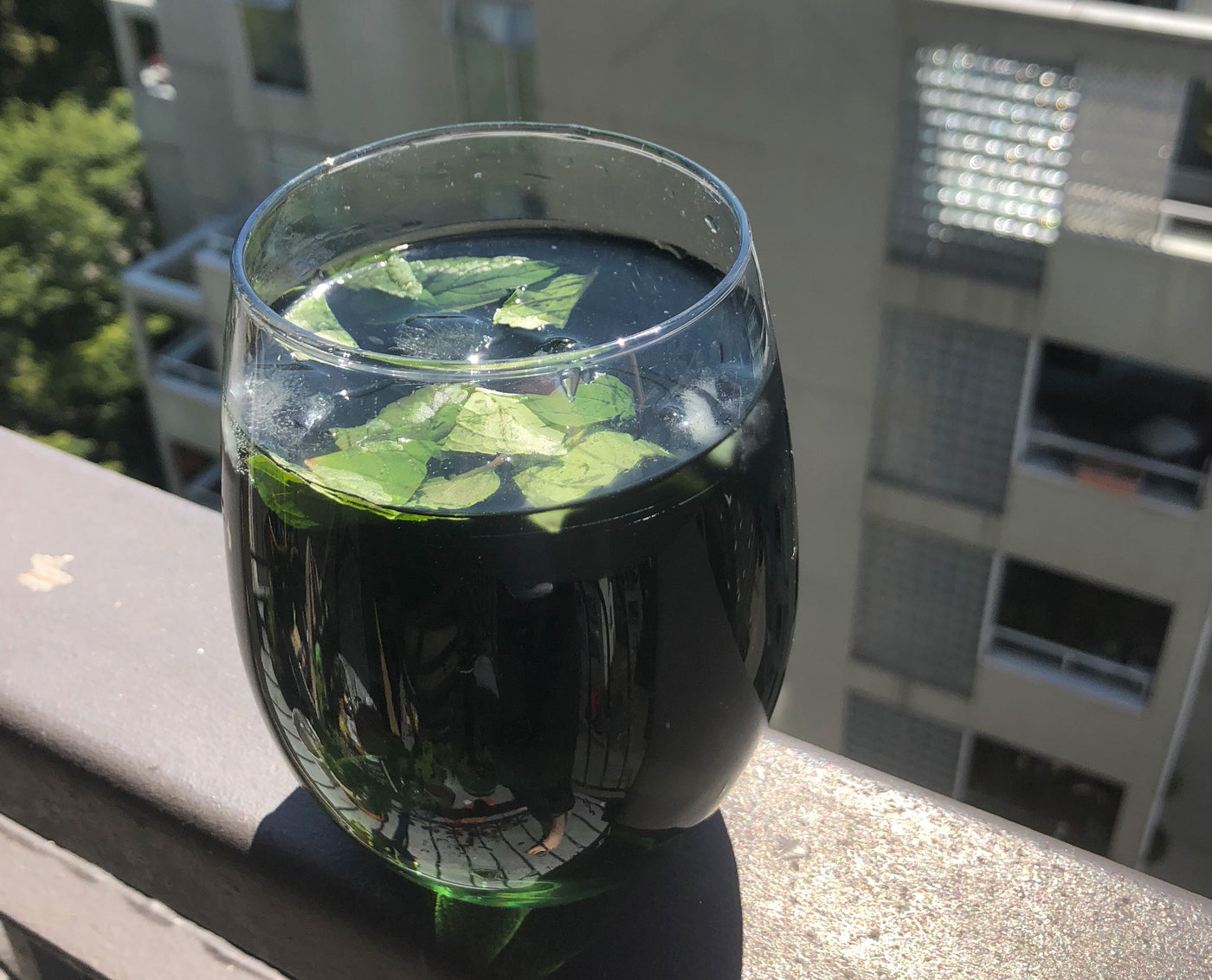
Simply dilute in water or add to your smoothie.
Cheers!
By Nicolas Martineau, B.Sc. Nutrition, and Michael Deslandes, Biologist
References:
- In vitro inhibition of hyaluronidase by sodium copper chlorophyllin complex and chlorophyllin analogs John P McCook 1, Peter L Dorogi 2, David B Vasily 3, Dustin R Cefalo 4
- Osowski A, Pietrzak M, Wieczorek Z, Wieczorek J. Natural compounds in the human diet and their ability to bind mutagens prevents DNA-mutagen intercalation. J Toxicol Environ Health A. 2010;73(17-18):1141-9. PubMed PMID: 20706936.
- Chemopreventive potential of chlorophyllin: a review of the mechanisms of action and molecular targets Siddavaram Nagini 1, Fabrizio Palitti, Adayapalam T Natarajan
- Sodium Copper Chlorophyllin Is Highly Effective against Enterovirus (EV) A71 Infection by Blocking Its Entry into the Host Cell Zezhong Liu 1, Shuai Xia 1, Xinling Wang 1, Qiaoshuai Lan 1, Peiyu Li 1, Wei Xu 1, Qian Wang 1, Lu Lu 1, Shibo Jiang 1 2
- Direction des produits de santé naturels http://www.hc-sc.gc.ca/dhp-mps/prodnatur/index-fra.php (recherche sur la chlorophylle à partir de Base de données des produits de santé naturels homologués : http://www.hc-sc.gc.ca/dhp-mps/prodnatur/applications/licen-prod/lnhpd-bdpsnh-fra.php)( accès le 13 février 2012)
- Gao F, Hu XF. Analysis of the therapeutic effect of sodium copper chlorophyllin tablet in treating 60 cases of leukopenia. Chin J Integr Med. 2005 Dec;11(4):279-82. PubMed PMID: 16417778.
- Yamazaki H, Fujieda M, Togashi M, Saito T, Preti G, Cashman JR, Kamataki T. Effects of the dietary supplements, activated charcoal and copper chlorophyllin, on urinary excretion of trimethylamine in Japanese trimethylaminuria patients. Life Sci. 2004 Apr 16;74(22):2739-47. PubMed PMID: 15043988.
- Egner PA, Muñoz A, Kensler TW. Chemoprevention with chlorophyllin in individuals exposed to dietary aflatoxin. Mutat Res. 2003 Feb-Mar;523-524:209-16. PubMed PMID: 12628519.
- Egner PA, Wang JB, Zhu YR, Zhang BC, Wu Y, Zhang QN, Qian GS, Kuang SY, Gange SJ, Jacobson LP, Helzlsouer KJ, Bailey GS, Groopman JD, Kensler TW. Chlorophyllin intervention reduces aflatoxin-DNA adducts in individuals at high risk for liver cancer. Proc Natl Acad Sci U S A. 2001 Dec 4;98(25):14601-6. Epub 2001 Nov 27. PubMed PMID: 11724948; PubMed Central PMCID: PMC64728.
- Kamat JP, Boloor KK, Devasagayam TP. Chlorophyllin as an effective antioxidant against membrane damage in vitro and ex vivo. Biochim Biophys Acta. 2000 Sep 27;1487(2-3):113-27. PubMed PMID: 11018464.
- Christiansen SB, Byel SR, Strømsted H, Stenderup JK, Eickhoff JH. [Can chlorophyll reduce fecal odor in colostomy patients?]. Ugeskr Laeger. 1989 Jul 3;151(27):1753-4. Danish. PubMed PMID: 2675439.
- Nahata MC, Slencsak CA, Kamp J. Effect of chlorophyllin on urinary odor in incontinent geriatric patients. Drug Intell Clin Pharm. 1983 Oct;17(10):732-4. PubMed PMID: 6628224.
- Sodium copper chlorophyllin attenuates adenine-induced chronic kidney disease via suppression of TGF-beta and inflammatory cytokines Sachin V Suryavanshi 1, Milind Gharpure 2, Yogesh A Kulkarni 3
- E2F4 and ribonucleotide reductase mediate S-phase arrest in colon cancer cells treated with chlorophyllin, Korakod Chimploy 1, G Dario Díaz, Qingjie Li, Orianna Carter, Wan-Mohaiza Dashwood, Christopher K Mathews, David E Williams, George S Bailey, Roderick H Dashwood
- Boloor KK, Kamat JP, Devasagayam TP. Chlorophyllin as a protector of mitochondrial membranes against gamma-radiation and photosensitization. Toxicology. 2000 Nov 30;155(1-3):63-71. PubMed PMID: 11154798.
- Boloor KK, Devasagayam TPA, Mohan H. Mechanisms responsible for the antioxidant properties of chlorophyllin : a pulse radiolysis study. BARC Newsletter 2004 249
- https://www.researchgate.net/profile/Ahmet_Inanc/publication/267786661_Chlorophyll_Structural_Properties_Health_Benefits_and_Its_Occurrence_in_Virgin_Olive_Oils/links/5a2eb6c00f7e9bfe816ff2b6/Chlorophyll-Structural-Properties-Health-Benefits-and-Its-Occurrence-in-Virgin-Olive-Oils.pdf
- https://www.ncbi.nlm.nih.gov/pmc/articles/PMC4966572/ anti-âge soleil peau
- https://jddonline.com/articles/dermatology/S1545961615P0589X acnée
- https://www.jaad.org/article/S0190-9622(14)01535-7/fulltext acnée
- https://agsjournals.onlinelibrary.wiley.com/doi/full/10.1111/j.1532-5415.1980.tb00124.x odeur
- https://www.o-wm.com/content/enzymatic-debriding-agents-an-evaluation-medical-literature cicatrisation
- https://www.americanjournalofsurgery.com/article/0002-9610(50)90531-9/pdf cicatrisation
- https://www.americanjournalofsurgery.com/article/0002-9610(47)90287-0/fulltext cicatrisation
- https://www.researchgate.net/profile/Devarajan-Karunagaran/publication/51752771_Chlorophyll_Revisited_Anti-inflammatory_Activities_of_Chlorophyll_a_and_Inhibition_of_Expression_of_TNF-a_Gene_by_the_Same/links/0046351a3339f93c3b000000/Chlorophyll-Revisited-Anti-inflammatory-Activities-of-Chlorophyll-a-and-Inhibition-of-Expression-of-TNF-a-Gene-by-the-Same.pdf anti-inflammatoire
- https://www.sciencedirect.com/science/article/abs/pii/S1466856407000495
- https://www.nationalgeographic.org/encyclopedia/chlorophyll/
- https://www.medicalnewstoday.com/articles/322361#foods-rich-in-chlorophyll
- https://www.khanacademy.org/science/biology/photosynthesis-in-plants/the-light-dependent-reactions-of-photosynthesis/a/light-and-photosynthetic-pigments
- A. Hendry, O.T. Jones, Haems and chlorophylls: comparison of function and formation; Journal of Medical Genetics, 1980 Feb; 17(1):1-14.
- Nagini S1, Palitti F, Natarajan AT , Chemopreventive potential of chlorophyllin: a review of the mechanisms of action and molecular targets; Nutr Cancer. 2015;67(2):203-11.
- https://www.webmd.com/diet/health-benefits-chlorophyll#1
- B.H. Patel, Handbook of Textile and Industrial Dyeing, 1st Edition, Elsivier 2011.
- Catarina Guedes, F.Xavier Malcata; Algal spent biomass – A pool of applications, Biofuels from Algae, 2nd Edition, 2019.
- Mishra, R.K. Bacheti, A. Husen, Medicinal Uses of Chlorophyll: a critical overview, Chemistry, 2012.
- https://www.researchgate.net/publication/283502487_Medicinal_Uses_of_Chlorophyll_A_Critical_Overview
- https://www.nature.com/scitable/topicpage/photosynthetic-cells-14025371/
- https://lazyplant.com/vitamins-minerals/chlorophyll-foods/