Free delivery on orders of $70 or more (Quebec/Ontario), $100 (rest of Canada) before taxes and after discounts.


By Nicolas Martineau B.Sc. Nutrition
The aging population is a global phenomenon that raises important health and quality-of-life challenges. Among these, cognitive health stands out, as it determines our ability to remain independent, engaged, and connected with others.
But cognitive health isn’t just about aging. In today’s fast-paced world, where demands at work and home keep increasing, our ability to focus, remember, and solve problems has never been more critical. Supporting brain health is key to success and well-being throughout life.
What Are Cognitive Functions?
Cognitive functions are the mental processes that allow us to process information and interact with our environment:
-
Memory – short-term (temporary storage) and long-term (past events).
-
Attention – the ability to focus despite distractions.
-
Language – speaking, writing, and understanding communication.
-
Reasoning – analyzing, making decisions, solving problems.
-
Perception – interpreting sensory information.
-
Planning & Organization – setting goals, strategizing, and time management.
These core functions are essential for daily life, making it vital to understand what factors can affect them.
Factors Influencing Cognitive Health
Several lifestyle and biological factors can impact brain health:
-
Age – natural aging may affect cognition, but active lifestyles help maintain it.
-
Nutrition – diets rich in antioxidants, omega-3s, and vitamins support brain function.
-
Physical activity – exercise improves circulation and stimulates brain proteins.
-
Sleep – quality sleep consolidates memory and restores balance.
-
Social and mental engagement – learning, playing, and connecting stimulate the brain.
-
Genetics – hereditary risks exist, such as Alzheimer’s, but lifestyle can help offset them.
The good news: while age and genetics are beyond our control, most other factors depend directly on our daily habits.
Supplements That Support Cognitive Health
In addition to a healthy diet and lifestyle, certain natural supplements can help preserve and even enhance mental performance:
-
Omega-3s – support memory and help reduce cognitive decline.
👉 [See Land Art Omega-3s] -
Ginkgo biloba – improves cerebral blood circulation.
-
Bacopa monnieri – supports memory and concentration.
-
Phosphatidylserine – helps protect cognitive function in aging.
-
Lion’s Mane (Hericium erinaceus) – medicinal mushroom with proven brain benefits.
👉 [See Land Art Lion’s Mane] -
B Vitamins (B6, B9, B12) – essential for neurological health and reducing homocysteine.
👉 [See Land Art B-Complex] -
Caffeine – boosts focus and short-term memory (in moderation).
-
Huperzine A – neuroprotective properties, supports learning and memory.
-
L-theanine – promotes calm focus, found in green tea.
👉 [See Land Art L-Theanine] -
Eleuthero (Siberian Ginseng) – adaptogen that helps reduce mental fatigue.
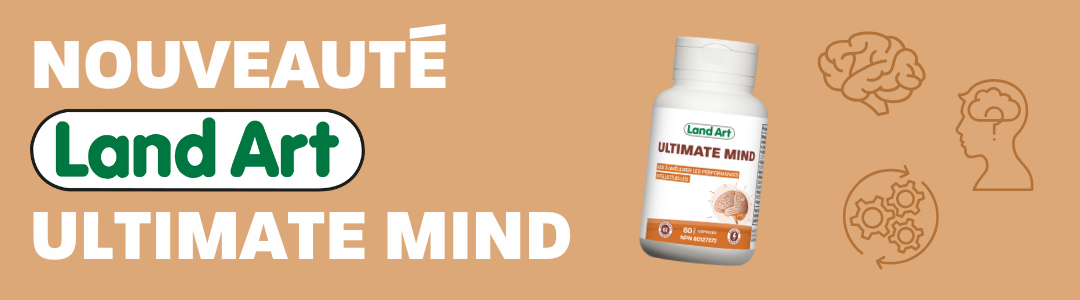
Ultimate Mind: A Complete Solution for Cognitive Health
To meet the growing need for brain support, Land Art has created Ultimate Mind: an advanced formula that targets multiple aspects of cognitive function.
This unique supplement combines L-Theanine, Ginkgo Biloba, Eleuthero, Bacopa Monnieri, Huperzine A, and Caffeine to provide:
-
improved memory,
-
better focus and concentration,
-
enhanced mental performance.
Convenient and effective, Ultimate Mind brings together multiple active ingredients in one easy-to-take capsule.
👉 [See Land Art Ultimate Mind]
How to Prevent Cognitive Decline with Lifestyle Habits
To preserve or boost your cognitive health, experts recommend:
-
Stay active – both physically and mentally.
-
Eat smart – prioritize brain-boosting nutrients and antioxidants.
-
Socialize – stay connected with family and friends.
-
Manage stress – try meditation, yoga, or relaxation techniques.
-
Seek medical guidance – regular checkups can help detect issues early.
Key Takeaway
Cognitive health is essential to overall well-being. By adopting healthy habits and considering targeted supplements like Ultimate Mind, you can protect your brain, improve your memory, and sustain your focus at every stage of life.
👉 Investing in your brain health is investing in your future.
References :
https://www.ncbi.nlm.nih.gov/pmc/articles/PMC4906299/
https://www.ncbi.nlm.nih.gov/pmc/articles/PMC4015335/
https://pubmed.ncbi.nlm.nih.gov/30351155/
https://www.ncbi.nlm.nih.gov/pmc/articles/PMC8534220/
https://www.ncbi.nlm.nih.gov/pmc/articles/PMC9773601/
https://www.ncbi.nlm.nih.gov/pmc/articles/PMC10746024/
https://pubmed.ncbi.nlm.nih.gov/25114079/
https://www.ncbi.nlm.nih.gov/pmc/articles/PMC8014356/
https://pubmed.ncbi.nlm.nih.gov/31126578/
https://pubmed.ncbi.nlm.nih.gov/24252493/
https://pubmed.ncbi.nlm.nih.gov/30839402/
https://pubmed.ncbi.nlm.nih.gov/19795377/
https://pubmed.ncbi.nlm.nih.gov/28748496/
https://www.ncbi.nlm.nih.gov/pmc/articles/PMC6567285/
https://www.ncbi.nlm.nih.gov/pmc/articles/PMC9415189/
https://www.ncbi.nlm.nih.gov/pmc/articles/PMC4145894/
https://www.ncbi.nlm.nih.gov/books/NBK209050/
https://www.ncbi.nlm.nih.gov/pmc/articles/PMC8080935/
https://www.ncbi.nlm.nih.gov/pmc/articles/PMC6836118/
https://pubmed.ncbi.nlm.nih.gov/31215788/